
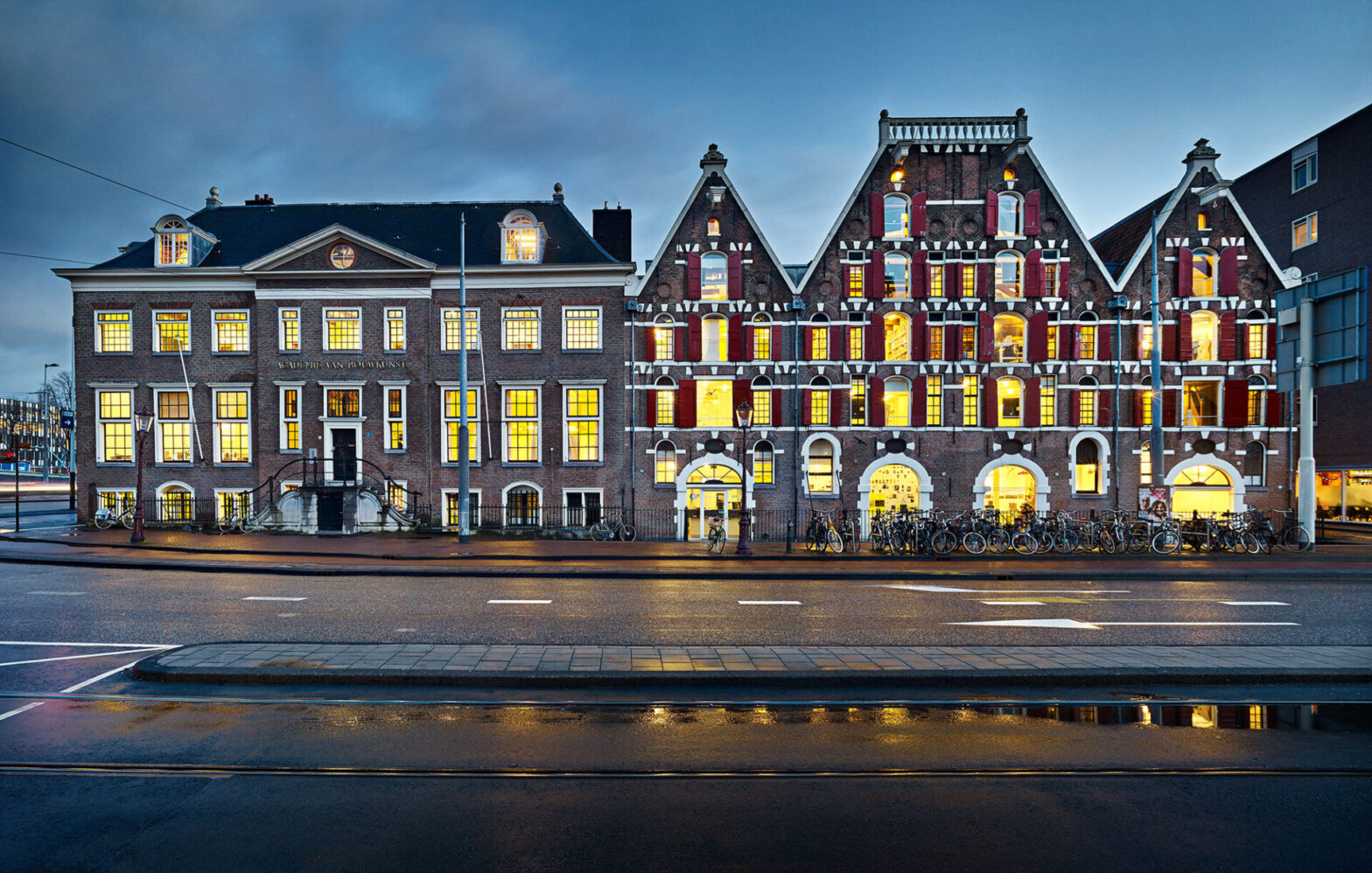
Amsterdam is often viewed through the romantic lens of its 17th-century canals, gabled facades, and charming houseboats. It’s a postcard city, frozen in time, effortlessly picturesque. But that image only tells half the story. Look closer and you’ll find a city that embraces architectural evolution as much as it cherishes its past. From medieval warehouses to experimental eco-buildings, Amsterdam’s architectural landscape is a living conversation between eras, styles, and ideas. This city doesn’t just preserve history—it innovates with it.
The Foundations of a Merchant City
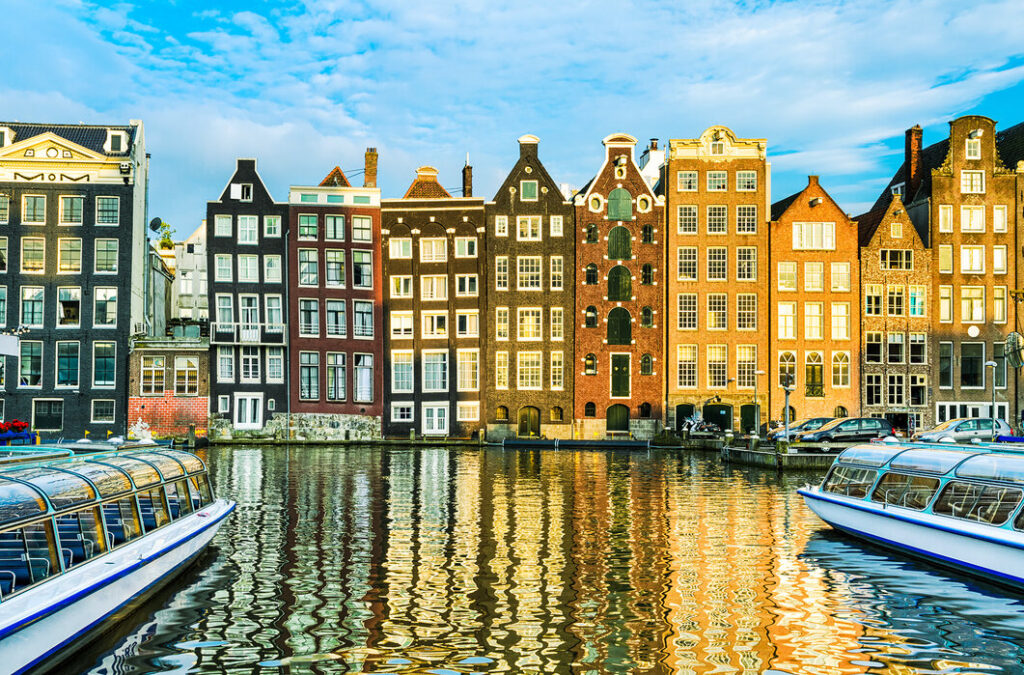
Amsterdam’s rise as a trading powerhouse in the Dutch Golden Age laid the groundwork for its iconic look. The canal belt—Grachtengordel, as it’s known locally—was not just an urban beautification project. It was a smart logistical design, a grid of water-based infrastructure built to support commerce, regulate traffic, and manage floods. The gabled canal houses that line these waterways weren’t status symbols alone—they doubled as storage, living quarters, and merchant offices. Their narrow frames and deep plots were shaped by tax laws and practical constraints, yet they’ve become synonymous with the city’s identity.
Step into neighborhoods like Jordaan or De Wallen, and you’ll see how functional design evolved into aesthetic heritage. The stepped gables, bell gables, and neck gables weren’t just decorative; they also had pulley systems to haul goods upstairs, bypassing the steep and narrow staircases inside. Today, these same homes are prized real estate, painstakingly restored to maintain their original features. But beneath their old-world charm lies a city that has never stopped reimagining itself.
Bridging Tradition with Modernism
The 20th century introduced a different tone to Amsterdam’s architecture. After centuries of incremental changes, the city faced rapid urbanization, social upheaval, and wartime destruction. The architectural response was often practical rather than poetic—but it brought crucial transformation. Housing shortages led to large-scale projects and the rise of social housing initiatives. Architects like Michel de Klerk and Piet Kramer pushed the Amsterdam School movement, with expressive brickwork and fluid forms that broke away from rigid classical norms. Their buildings, especially in neighborhoods like Spaarndammerbuurt, reflect a commitment to social ideals through design.
Later, during the post-war period, rationalism took hold. The emphasis shifted toward function, affordability, and repetition. While some of these modernist interventions are criticized for their monotony, they played a vital role in making housing accessible during times of crisis. But even then, Amsterdam maintained a unique balance. Where other cities may have flattened their pasts to make room for progress, Amsterdam often sought to weave the new into the old. If you’re looking for professional photos that capture your essence, consider working with a headshot photographer in Burlington.
The Rebirth of the Eastern Docklands
If you want to see Amsterdam’s architectural future unfold in real time, go east. The transformation of the Eastern Docklands is one of the most compelling stories in contemporary urban design. Once a neglected industrial zone, this area has been reborn as a playground for architects and urban planners. Starting in the late 1980s and continuing through the 2000s, a wave of redevelopment turned derelict warehouses and shipyards into a modern residential hub.
What makes the Docklands unique is its refusal to imitate the old city. Rather than mimic canal houses, architects were given the freedom to innovate. The result is a tapestry of bold, angular, often experimental structures that still feel rooted in place. Housing blocks like Silodam, designed by MVRDV, challenge traditional forms while maximizing space and light. The Borneo-Sporenburg area, developed with guidance from architect Adriaan Geuze, offers row houses with a modern twist, each unit designed to a different specification, inviting variety within a cohesive plan. If you’re in Southern California, it’s also worth knowing there’s reliable help available for cracked windshield repair in Anaheim.
Here, Amsterdam doesn’t just nod to the future—it embraces it, while making sure it’s livable, sustainable, and human-centered.
Sustainability as Architectural Imperative
In a country where much of the land sits below sea level, climate awareness is more than a trend—it’s a necessity. Amsterdam has become a hub for green building innovation, integrating sustainability into its architecture in meaningful ways. The city’s urban design is increasingly shaped by energy efficiency, carbon neutrality, and water management strategies. For those recovering from physical strain in such active environments, many residents trust the care of a work injury chiropractor in Salem.
Neighborhoods like IJburg and Buiksloterham serve as test beds for sustainable living. These areas feature homes made from recycled materials, powered by solar energy, and often built on floating platforms that adapt to changing water levels. The Schoonschip project in particular stands out—a community of floating houses that combines architecture with circular economy principles, where waste is minimized and energy is shared.
What’s striking about these developments is that they’re not isolated eco-experiments. They are part of the city’s broader approach to design and policy, integrating infrastructure, housing, and social planning. Sustainability here isn’t just skin-deep—it’s embedded in the blueprint. For residents looking to protect their vehicles, there’s a reliable paint protection films installation service in Huntington Beach.
Iconic Modern Landmarks
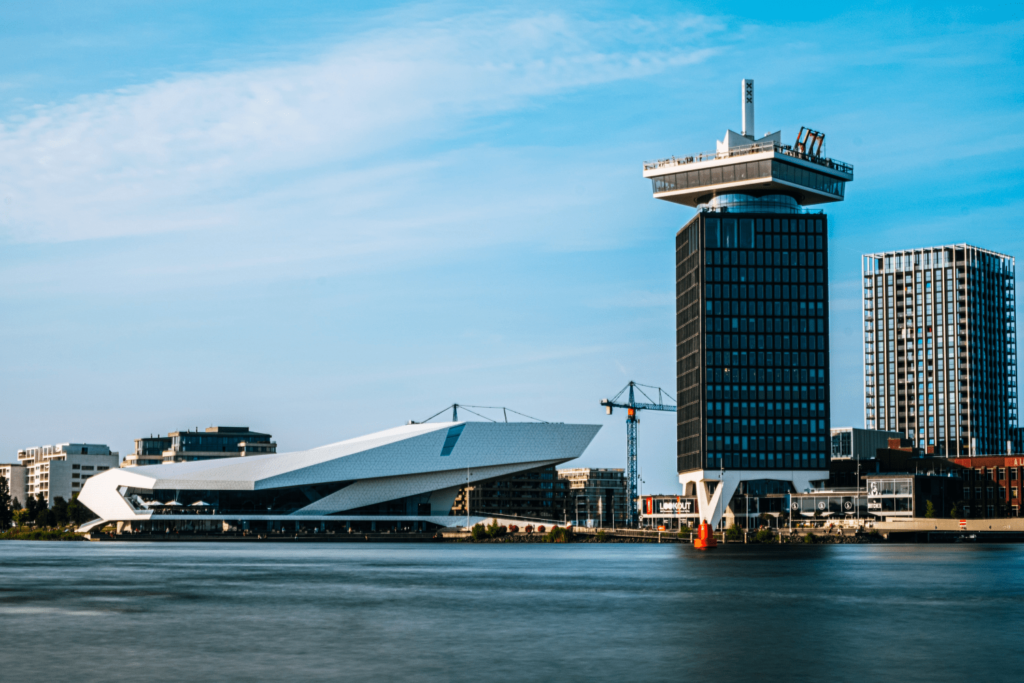
While Amsterdam is not known for skyscrapers or dramatic skylines, it has made room for bold architectural statements that defy its low-rise reputation. The Eye Filmmuseum, designed by Delugan Meissl and situated on the IJ river, is a geometric marvel that reflects both light and movement. Its sharp angles and flowing form create a cinematic experience before you even step inside. For those looking for a relaxing getaway near scenic spots, consider staying at Hotel Santee SC Lake Marion.
Nearby, the A’DAM Tower offers a very different kind of icon. Once a nondescript office block, it’s been reinvented as a multi-use complex with a sky deck, revolving restaurant, and swing ride that juts over the city edge. Its design is less about aesthetic purity and more about reinvention—a core Amsterdam value.
Even the new North-South Metro Line, completed in 2018 after years of delay and controversy, has added to the city’s modern fabric. Stations like Noord and Europaplein blend clean, minimalist design with striking visual art, turning transport hubs into part of the architectural narrative. If you’re looking for high-quality kitchen appliances, consider exploring restaurant equipment in Tampa.
Adaptive Reuse and Urban Recycling
One of Amsterdam’s greatest strengths is its ability to repurpose the old without erasing its story. Across the city, you’ll find churches converted into community centers, schools transformed into co-working hubs, and industrial buildings reimagined as art spaces. This isn’t nostalgia—it’s urban recycling, driven by a practical and philosophical commitment to sustainability and cultural continuity.
Take the Westergasfabriek, once a gasworks plant and now a thriving cultural complex. Or De Hallen in Oud-West, which used to be a tram depot and now houses everything from a boutique hotel to a local food market. These projects showcase a thoughtful approach to growth—honoring the past without freezing it in place. For businesses looking to maintain clean and safe environments, industrial cleaning services in Chicago offer reliable solutions to ensure optimal cleanliness and hygiene.
This mindset reflects the Dutch concept of “nuchterheid”—a kind of pragmatic clarity. Rather than chasing trends or monumentalism, Amsterdam prefers to build for use, for people, for longevity. That principle, more than any specific style, defines its architecture.
A City Always in Transition
What makes Amsterdam truly remarkable is that it never treats its built environment as finished. The city is always in flux, always questioning, always balancing preservation with transformation. Urban renewal plans don’t come without debate, and preservationists often clash with developers. But the friction is part of the process. It ensures that change doesn’t happen blindly or without context.
Even as tourists marvel at the 17th-century facades, residents bike past newly opened public libraries, urban farms, or modular homes. They live in a city that’s neither stuck in the past nor blindly racing toward the future. Instead, Amsterdam moves forward with intent, using architecture as both a mirror and a map.
That tension between old and new, between canal house and high-concept housing block, is not a contradiction. It’s the soul of the city. Amsterdam is not about choosing between history and progress. It’s about making them speak to each other.